Canine Elbow Dysplasia Rehabilitation
Expert veterinary physiotherapy in Cornwall for dogs with elbow dysplasia — reducing pain, restoring movement, and in some cases avoiding surgery altogether through structured conservative management.
Understanding the condition
What is Elbow Dysplasia?
Elbow dysplasia is an umbrella term for a group of developmental conditions affecting the elbow joint in growing dogs. It is one of the most common causes of front limb lameness in young and middle-aged dogs, and one of the leading causes of elbow osteoarthritis.
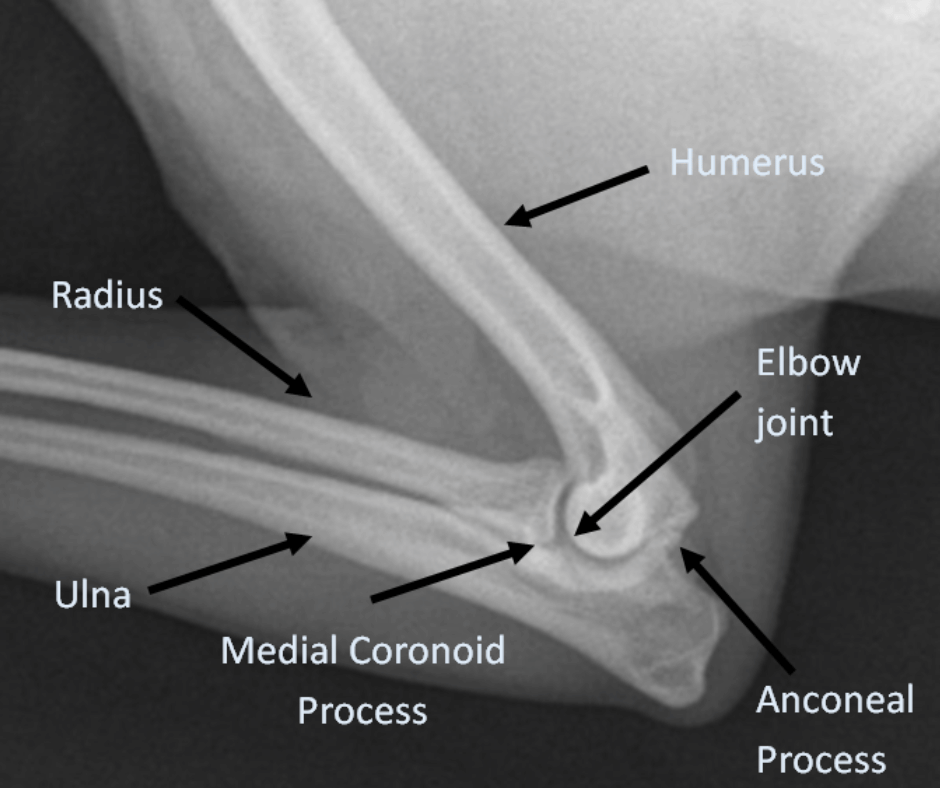
The elbow joint is formed by three bones — the humerus, radius, and ulna. During development, these bones must grow at matching rates and fit together precisely. When growth is uneven, abnormal pressures develop within the joint, causing damage to cartilage and bone. Left unmanaged, this leads to chronic inflammation, pain, and progressive arthritis.
Elbow dysplasia is strongly hereditary and particularly common in larger, faster-growing breeds. It typically presents in dogs between 4 and 18 months of age, though some cases are not diagnosed until adulthood when arthritis becomes symptomatic.
The four main conditions grouped under elbow dysplasia are:
-
Fragmented Medial Coronoid Process (FMCP) — The most common form. A fragment of bone breaks off inside the joint, causing inflammation, cartilage erosion, and pain. Often treated surgically, though conservative management is successful in mild cases.
-
Osteochondrosis Dissecans (OCD) — A flap of cartilage detaches from the humeral head, creating a loose body in the joint. Causes significant pain and often requires surgical removal of the flap.
-
Ununited Anconeal Process (UAP) — A bony projection at the back of the elbow fails to fuse during development. Creates joint instability and is usually managed surgically in moderate to severe cases.
-
Elbow Incongruency — A mismatch in the joint surfaces due to unequal bone growth. Creates abnormal loading across the joint and accelerates arthritis. The underlying issue in many cases of FMCP and UAP.
Important to know
Surgery Isn't Always the Answer
While surgery is often recommended for moderate to severe elbow dysplasia, low-grade cases can often be successfully managed conservatively through structured physiotherapy, exercise management, and joint support.
The goal of both surgical and conservative management is the same — reducing pain, protecting cartilage, slowing arthritis progression, and maintaining quality of life. Physiotherapy plays a central role in achieving this regardless of the route taken.
Hardy's case (below) is a real example of a dog who avoided surgery entirely through a tailored rehabilitation programme.
Recognising the signs
Signs of Elbow Dysplasia
Elbow dysplasia most commonly appears in young, rapidly growing dogs — but can also present later in life when underlying joint damage leads to progressive arthritis. Early diagnosis and management significantly slows deterioration and improves long-term quality of life.
Front Limb Lameness
Persistent or intermittent lameness on one or both front legs — often worse after rest and initially improving with exercise, before worsening again. Lameness may be subtle in early or mild cases.
Stiffness After Rest
Difficulty rising after sleep or prolonged rest, stiffness first thing in the morning, or warming out of lameness with gentle movement — all classic signs of elbow joint inflammation.
Abnormal Gait
Dogs may hold the affected elbow away from the body, turning the paw outward to reduce loading on the painful part of the joint. This is a telling compensatory posture.
Muscle Wasting
Visible loss of muscle in the affected foreleg due to reduced weight bearing. In bilateral cases, overall reduced front end muscle mass may be noticed before lameness becomes obvious.
Pain on Manipulation
Flinching or resistance when the elbow is flexed or extended, or when pressure is applied to the inner aspect of the joint. Often identified during a vet examination before owners notice lameness.
Reluctance to Exercise
Unwillingness to play, run, or keep up on walks — especially in a young dog who should be full of energy. A common reason young Labradors and Retrievers appear less energetic than expected.
Treatment & recovery
How Physiotherapy Helps
Whether your dog is being managed conservatively or has undergone surgery, physiotherapy is an essential part of achieving the best possible outcome. The joint itself may be damaged, but how the dog uses it, loads it, and compensates around it is something I can directly influence.
I work with dogs at every stage of elbow dysplasia — from newly diagnosed young dogs exploring conservative management, to post-surgical rehabilitation and long-term arthritis management in older dogs.
What I Do in Sessions
🤲 Manual Therapy & Joint Mobilisation
Targeted massage and gentle joint mobilisation reduce muscle tension around the elbow, improve range of motion, and manage the pain and stiffness that develops with chronic joint disease.
🏋️ Targeted Strengthening
Strong, well-conditioned muscles around the elbow act as a natural brace — absorbing load and reducing the stress placed directly on the damaged joint surfaces. I build a structured strengthening programme that progresses at a safe pace for each individual dog.
🔵 Proprioception & Movement Retraining
Elbow dysplasia disrupts normal movement patterns — dogs compensate by loading differently, shifting weight to other limbs, and developing altered gaits. I identify and correct these compensations early through proprioceptive exercises and gait retraining.
🔴 Laser Therapy & Electrotherapy
Therapeutic laser reduces inflammation within the joint, promotes tissue repair, and provides effective pain relief — particularly valuable in acute flare-ups and post-surgically. TENS provides additional pain management safe for young dogs.
📏 Exercise & Load Management
Getting exercise right is one of the most important aspects of managing elbow dysplasia. Too much loading accelerates joint damage; too little leads to muscle loss and weight gain. I provide a clear, structured exercise plan that gives the joint the best chance of staying comfortable long-term.
🌊 Hydrotherapy Support
Water-based exercise allows cardiovascular conditioning and muscle building with significantly reduced joint loading — ideal for dogs with painful or post-surgical elbows. I coordinate with hydrotherapy providers to ensure land-based and water-based programmes complement each other.
🏠 Home Exercise Programme
Consistency between sessions is what makes the difference. I'll provide a clear home programme that evolves as your dog progresses — covering exercise guidance, specific strengthening movements, and practical day-to-day management advice.
Why Physio Makes a Difference
Can be a genuine alternative to surgery in mild to moderate cases
Builds muscle support around the damaged joint, reducing pain and instability
Corrects compensatory movement patterns that lead to secondary injuries
Slows arthritis progression through optimised loading and joint care
Manages chronic pain naturally, reducing reliance on long-term medication
Supports post-surgical recovery and maximises the outcome of any procedure
Gives young dogs the best possible start with a lifelong joint condition
Empowers you with the knowledge to manage your dog's condition at home
A Typical Management Journey
Initial Assessment
Full gait analysis, joint assessment, muscle condition scoring, and review of imaging and vet referral. A tailored plan is built around the dog's grade, age, and lifestyle.
Weeks 1–4 — Foundation
Pain management, gentle range of motion, laser therapy, exercise structuring, and beginning targeted foreleg strengthening. Home programme established from the first session.
Weeks 4–12 — Strengthening
Progressive muscle building, proprioceptive retraining, gait correction, and gradual increase in controlled exercise. Regular reassessment of comfort and progress.
Ongoing — Maintenance
Long-term management plan, periodic check-ins, home exercise maintenance, and lifestyle advice to protect the joints and keep the dog comfortable as they age.
The evidence base
What the Research Shows
The evidence for physiotherapy in elbow dysplasia management is well supported — both for conservative management and post-surgical rehabilitation. Dogs who receive structured rehabilitation do better long-term.
Conservative Management Works
Research supports conservative management as a viable first-line approach for low-grade elbow dysplasia. Structured exercise restriction combined with targeted physiotherapy achieves resolution of lameness in a significant proportion of mild cases.
Muscle Support Reduces Joint Loading
Well-conditioned periarticular muscles significantly reduce peak loads on the elbow joint surfaces. Strengthening programmes reduce pain, improve function, and slow the progression of secondary osteoarthritis.
Compensation Causes Secondary Problems
Dogs with elbow dysplasia routinely develop compensatory changes in the shoulder, neck, and contralateral limb. These secondary musculoskeletal changes are a major contributor to long-term discomfort — and are preventable with early physiotherapy.
Laser Reduces Inflammation
Photobiomodulation has been shown to reduce synovial inflammation and cartilage degradation in osteoarthritic joints. Regular laser therapy is increasingly used as an evidence-based adjunct to both conservative and post-surgical management.
Arthritis Is Inevitable — But Manageable
All dogs with elbow dysplasia will develop some degree of osteoarthritis. However, optimising joint loading, maintaining muscle condition, and managing weight significantly slows progression and maintains quality of life well into old age.
Post-Surgical Physio Improves Outcomes
Dogs who receive structured physiotherapy following elbow surgery regain limb function faster and demonstrate better long-term gait symmetry compared to those managed with rest alone.
Real results
Elbow Dysplasia Case Study
A real dog, a real outcome. Sometimes surgery isn't the only option.
surgery pending
no surgery needed
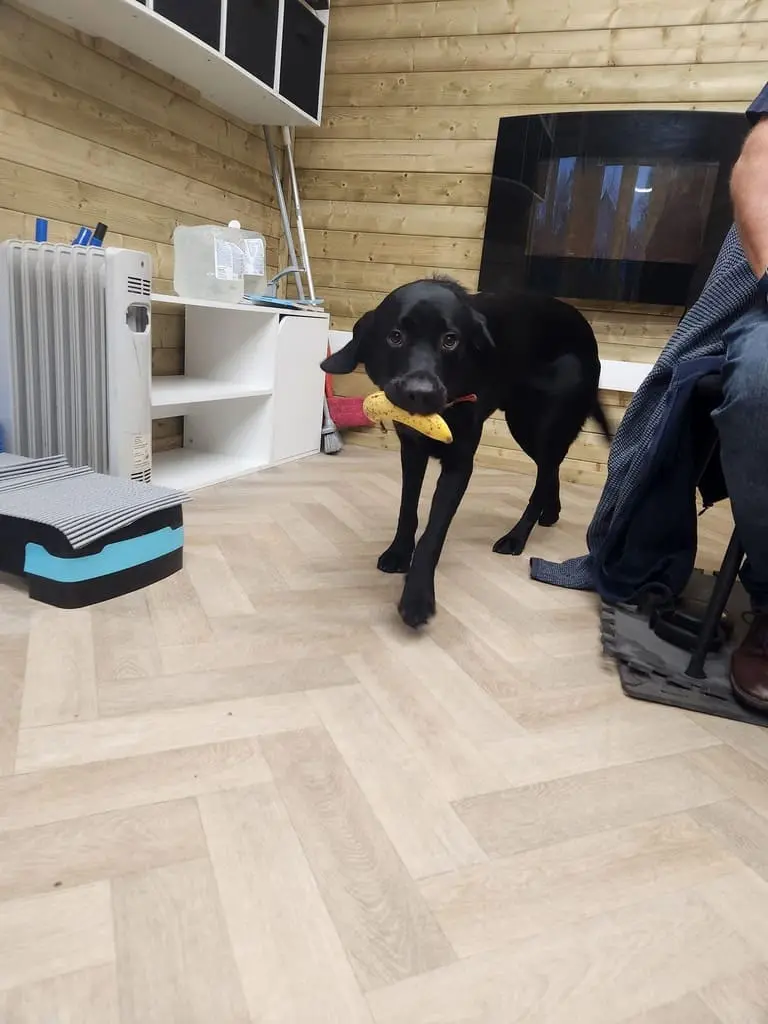
🐾 Hardy — Elbow Dysplasia Managed Conservatively
10-month-old Labrador. Low-grade elbow dysplasia. Referred from Penmellyn Vets.
Hardy was diagnosed with low-grade elbow dysplasia and referred by Christian at Penmellyn Vets. He was visibly lame and surgery was on the table as a potential next step.
Christian recommended trying physiotherapy before committing to surgery. Hardy completed a course of tailored rehabilitation designed to strengthen the joint, correct his movement patterns, and manage the load through his elbow — without surgical intervention.
Lameness fully resolved. Surgery no longer required. Hardy is happy, active, and moving well — a great example of what structured conservative rehabilitation can achieve in a young dog with low-grade elbow dysplasia.
Hardy is one of many dogs who have benefited from physiotherapy as an alternative or complement to surgery.
See All Case Studies →Specialist programme
The Rehabilitation Package
A structured, evidence-based programme for dogs with elbow dysplasia — whether pursuing conservative management or recovering from surgery.
💪 Post-Op / Conservative Orthopaedic Package
Elbow Dysplasia, TPLO, Hips & Orthopaedic Conditions
What's Included
- 1 × Initial Physiotherapy Consultation (£60 value)
- 5 × Follow-Up Treatment Sessions (£50 each)
- Tailored conservative or post-surgical rehab plan
- Targeted strengthening & movement correction programme
- Laser therapy or electrotherapy included in sessions
- Home exercise programme with clear guidance
- Direct communication between sessions
Recommended Schedule
- Initial consult as soon as possible after diagnosis
- Fortnightly sessions for the first 6–8 weeks
- Frequency adjusted as strength and comfort improve
- Ongoing maintenance sessions available after package
💡 Earlier is always better
Starting physiotherapy early — before significant muscle loss or compensatory changes develop — gives your dog the best chance of a comfortable, active life.
Helping animals move better, recover faster, and live their best life.
BUSINESS


SERVICES
SERVICE AREAS
OPERATING HOURS
Sun: Closed
Mon: 9:00am - 5:00pm
Tue: 9:00am - 5:00pm
Wed: 9:00am - 5:00pm
Thu: 9:00am - 5:00pm
Fri: 9:00am - 5:00pm
Sat: Closed
Privacy Policy | Term & Condition | FAQ
Copyright © 2026 Kirsten Vet Physio. All rights reserved.