Success Stories
Real dogs, real results. Every case here started with an owner who wasn't sure physiotherapy could help. Here's what happened.
🐾 Jet — Lameness From His Neck
Two months of unexplained forelimb lameness. X-rays clear. Rest made it worse.
The Problem
Jet had two months of unexplained forelimb lameness before seeing me. X-rays were clear, rest made it worse, and a CT scan was being considered. Jet is a very nervous dog so we worked on assessing different parts of his body across different sessions.
What I Found
The real issue was in his neck — a significant restriction when bending to the right. The lameness wasn't coming from his leg at all.
The Treatment
Gentle, targeted physiotherapy and simple home exercises. His lameness resolved almost instantly and his neck mobility improved dramatically.
Six sessions later, Jet is running comfortably and enjoying life again. No CT scan needed.
A powerful reminder that lameness doesn't always originate from the limb itself.
🐾 Dexter — IVDD Spinal Surgery Recovery
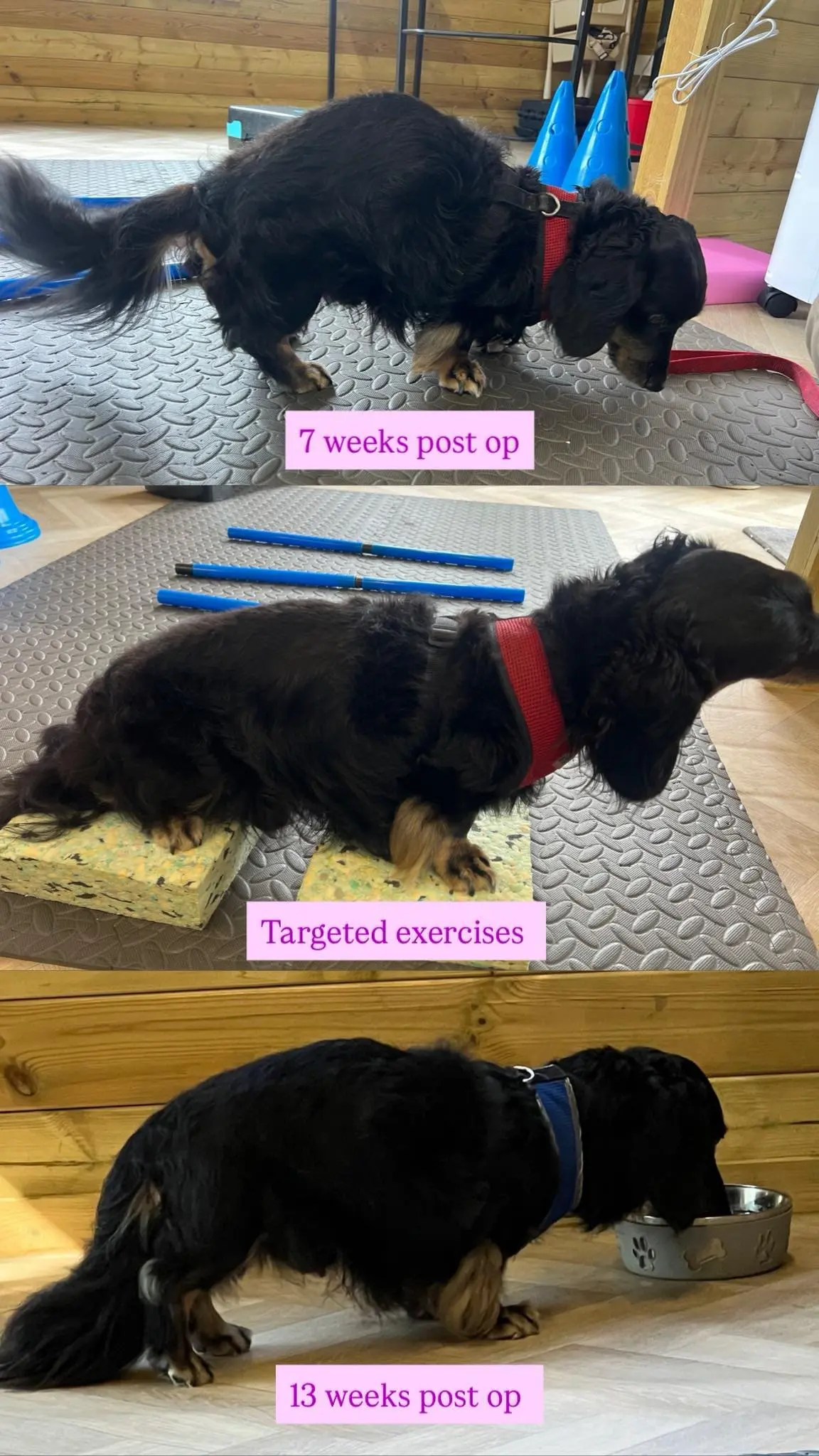
9-year-old Dachshund. Still sling-dependent 7 weeks after spinal surgery.
The Problem
Dexter began physiotherapy seven weeks after spinal surgery for IVDD. He was still dependent on a sling, had significant hind limb weakness, and a noticeable roach in his back.
The Treatment
Targeted physiotherapy, sling adaptations, and adjunct radiofrequency therapy. Dexter made steady progress with a structured rehab plan built around his abilities at each stage.
Rehab Focus
Dexter now walks independently with a stronger, more coordinated gait. You can really see the difference in his back.
A fantastic example of teamwork and structured rehab after IVDD surgery.
🐾 Toffee — From Paralysis to Normal Life
Paralysed from a cervical disc extrusion. Barely any movement in her front limbs.
The Problem
Toffee became paralysed due to a disc extrusion in her neck. She had ventral slot decompression surgery and came to me with just some movement in her front limbs.
When She Started
Paralysed. Minimal front limb movement. Unable to walk or stand.
Where She Is Now
Completely normal dog. Walking, running, living life.
The Rehabilitation
Toffee underwent intensive rehabilitation over several weeks. There were always little improvements along the way, building on each other session by session.
Toffee is now a normal dog. You wouldn't know she was ever paralysed.
Early, consistent rehabilitation gives the best chance of neurological recovery. Toffee is living proof.
🐾 Gus — Patella Luxation Rehab Done Right
Post-surgery. Pain relief had ended but discomfort was limiting progress.
The Problem
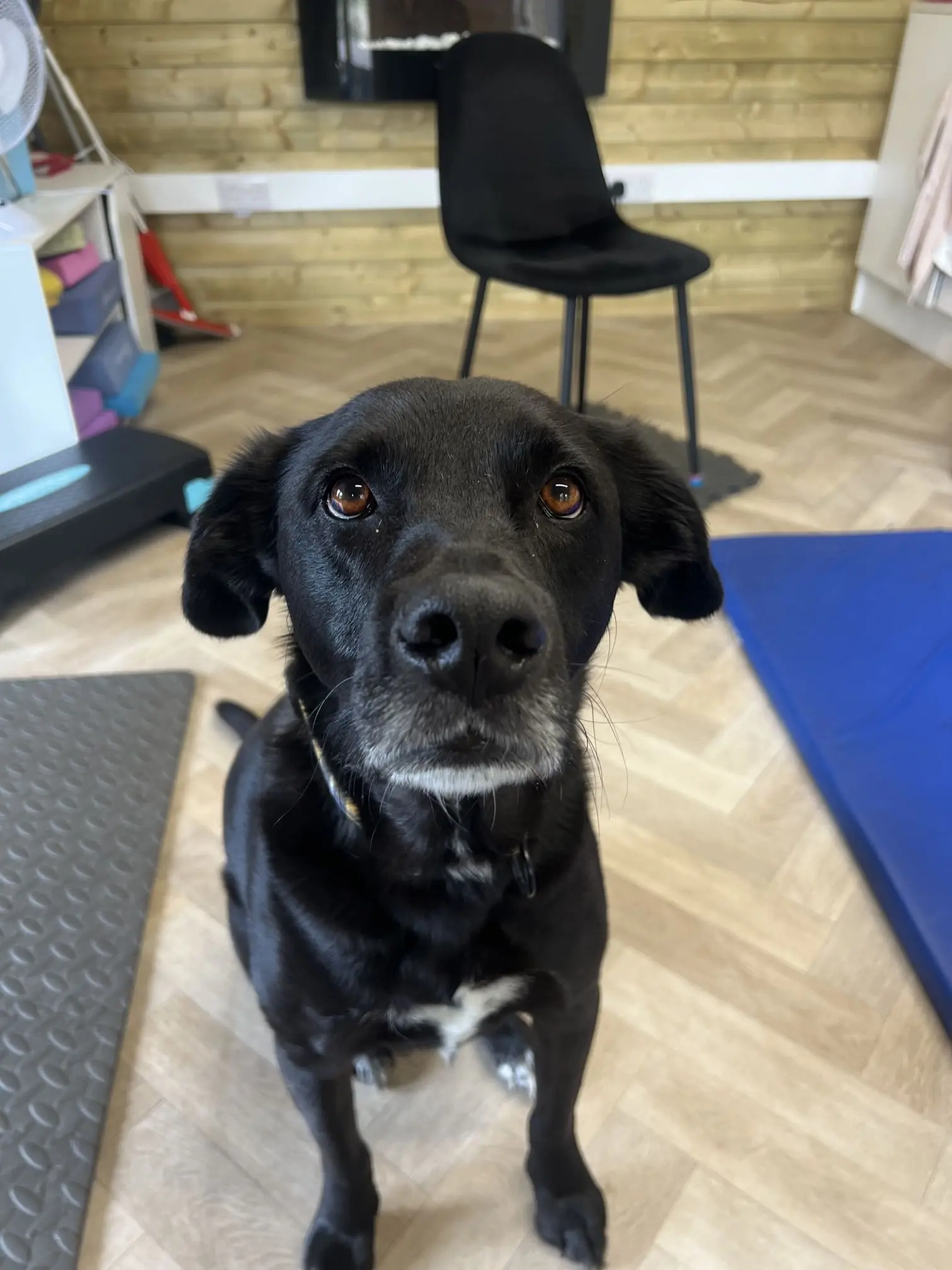
Gus had undergone surgery for patella luxation. When physio began, he had just finished his pain relief but discomfort was still limiting his progress and holding back his recovery.
The Approach
In agreement with his vet, short-term medication was reintroduced to support his rehab. The result was better movement, improved weight-bearing, and faster progress.
Key Win
Gus didn't need the second lot of injections into his stifle because the physiotherapy was doing such a good job. Once he was strong and confident, medication was gradually withdrawn.
Fully signed off. Maintenance sessions only. No additional stifle injections needed.
Managing pain early creates the best foundation for successful rehabilitation.
🐾 Belle — TPLO Surgery Recovery
Post-op rehabilitation package. Building strength the right way.
The Problem
Belle had TPLO surgery and her owners wanted to make sure they were doing the right things during recovery, building up the muscles supporting the joint correctly rather than guessing.
The Treatment
Belle came to me for the post-operation rehabilitation package. A structured programme of sessions focused on progressive strengthening, correct loading, and making sure everything was heading in the right direction at each stage.
Belle successfully completed her rehabilitation and is now back to being a normal dog.
🐾 Rhonda — Bilateral TPLO Post-Surgery Rehab
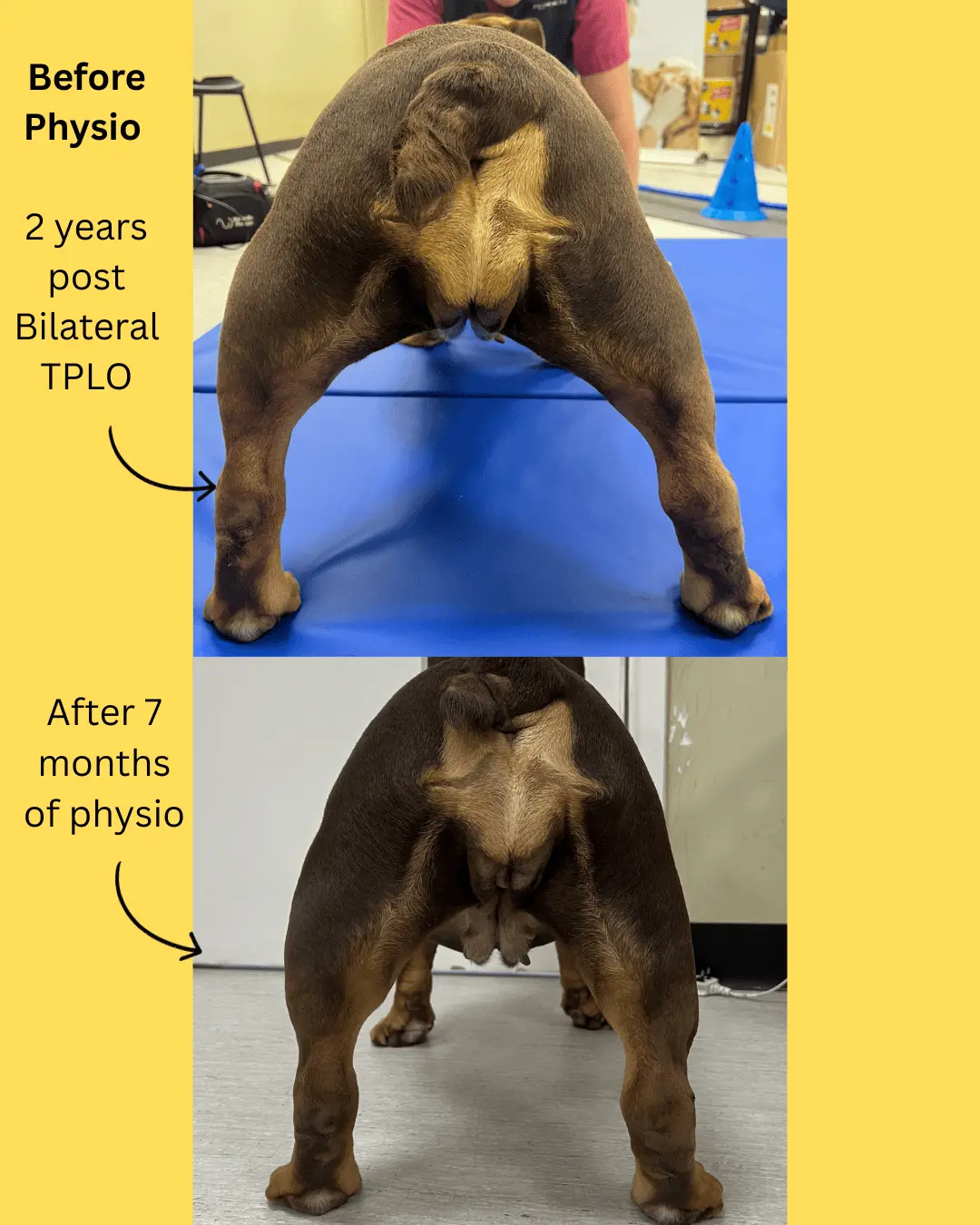
5-year-old British Bulldog. Intermittently lame and relying on pain medication after bilateral TPLO surgery.
The Problem
Rhonda had bilateral TPLO surgery in February 2023 but continued to struggle with intermittent lameness and was relying on pain medication. Even after X-rays and a specialist consult at Vets4Pets St Austell, nothing obvious was found to explain her ongoing discomfort.
The Approach
Starting in August 2025 at Vets4Pets Bodmin, Rhonda's assessment revealed significant postural asymmetry. A targeted home exercise programme was designed to address her uneven weight distribution and rebuild strength gradually.
Key Win
Rhonda's transformation was achieved entirely through targeted exercises at home — no additional procedures, no ongoing medication. Just consistent, structured rehab.
Standing much more evenly, walking with improved stability and coordination, and completely off pain medication. Still some asymmetry but a remarkable improvement.
When diagnostics come back clear but the dog is still struggling, physiotherapy can make all the difference.
🐾 Rosie — Severe IVDD Recovery Journey
Post L3/L4 disc extrusion surgery (2025) + previous IVDD surgery (2023). Rehab at Vets4Pets Bodmin.
The Problem
Rosie lost all movement and sensation in her hind legs following a severe L3/L4 disc extrusion requiring emergency spinal surgery. She also had previous IVDD surgery in 2023.
The Approach
Carefully structured physiotherapy focused on posture correction, neurological re-education, strength building, and coordination. Supported with hydrotherapy at Duchy Canine Hydrotherapy and consistent home exercise work.
Key Win
Rosie progressed from complete hind limb paralysis to walking independently again — a remarkable recovery considering her starting point.
Rosie is now able to move independently again and continue improving daily with ongoing rehabilitation and dedicated owner support.
Recovery after spinal surgery is rarely linear — but consistent rehab, patience, and commitment can completely change the outcome.
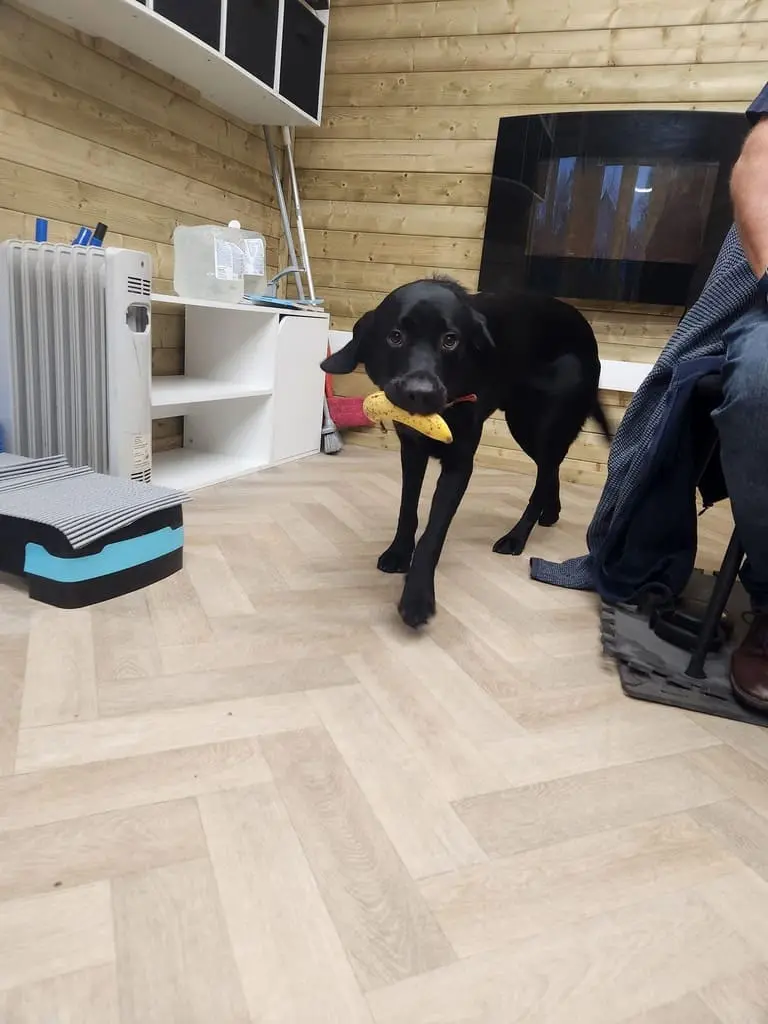
🐾 Hardy — Elbow Dysplasia Managed Conservatively
10-month-old Labrador. Lame with low-grade elbow dysplasia. Referred from Penmellyn Vets.
The Problem
Hardy was diagnosed with low-grade elbow dysplasia and referred by Christian at Penmellyn Vets. He was visibly lame and surgery was on the table as a potential next step.
The Approach
Christian recommended trying physiotherapy before committing to surgery. Hardy completed a few months of tailored rehabilitation designed to strengthen the joint and improve his movement patterns.
Key Win
Hardy went from lame to moving comfortably and confidently — and no longer needs surgery. A conservative approach that delivered exactly what was needed.
Lameness fully resolved. Surgery no longer required. Hardy is happy, active, and moving well.
Physiotherapy can be a genuine alternative to surgery for low-grade elbow dysplasia — always worth exploring before going under the knife.
Request A Quote

100+ Years of Combined Experience in the Tree Service Industry

🐾 Asha — From Decline to Thriving Again
11-year-old dog. Post respiratory infection weakness, imbalance & reduced coordination.
The Problem
Asha experienced a sudden decline in mobility following a respiratory infection. Her gait became weak, unbalanced, and uncoordinated, and she required medication support.
The Approach
Monthly physiotherapy sessions combined with consistent home exercise work focused on rebuilding strength, stability, coordination, and confidence in movement.
Key Win
Asha has made a full turnaround — now stable, balanced, energetic, and importantly, she is no longer on medication.
Asha is now moving confidently again and enjoying life — even running and zooming around like her old self.
Even after sudden neurological decline, consistent physiotherapy and home commitment can lead to life-changing recovery outcomes.
TESTIMONIALS FROM MY PREVIOUS CLIENTS
VET PHYSIO CLIENT REVIEWS
Helping animals move better, recover faster, and live their best life.
BUSINESS


SERVICES
SERVICE AREAS
OPERATING HOURS
Sun: Closed
Mon: 9:00am - 5:00pm
Tue: 9:00am - 5:00pm
Wed: 9:00am - 5:00pm
Thu: 9:00am - 5:00pm
Fri: 9:00am - 5:00pm
Sat: Closed
Privacy Policy | Term & Condition | FAQ
Copyright © 2026 Kirsten Vet Physio. All rights reserved.